Securing Working Capital for Auto Repair Shops in 2026: A Practical Guide
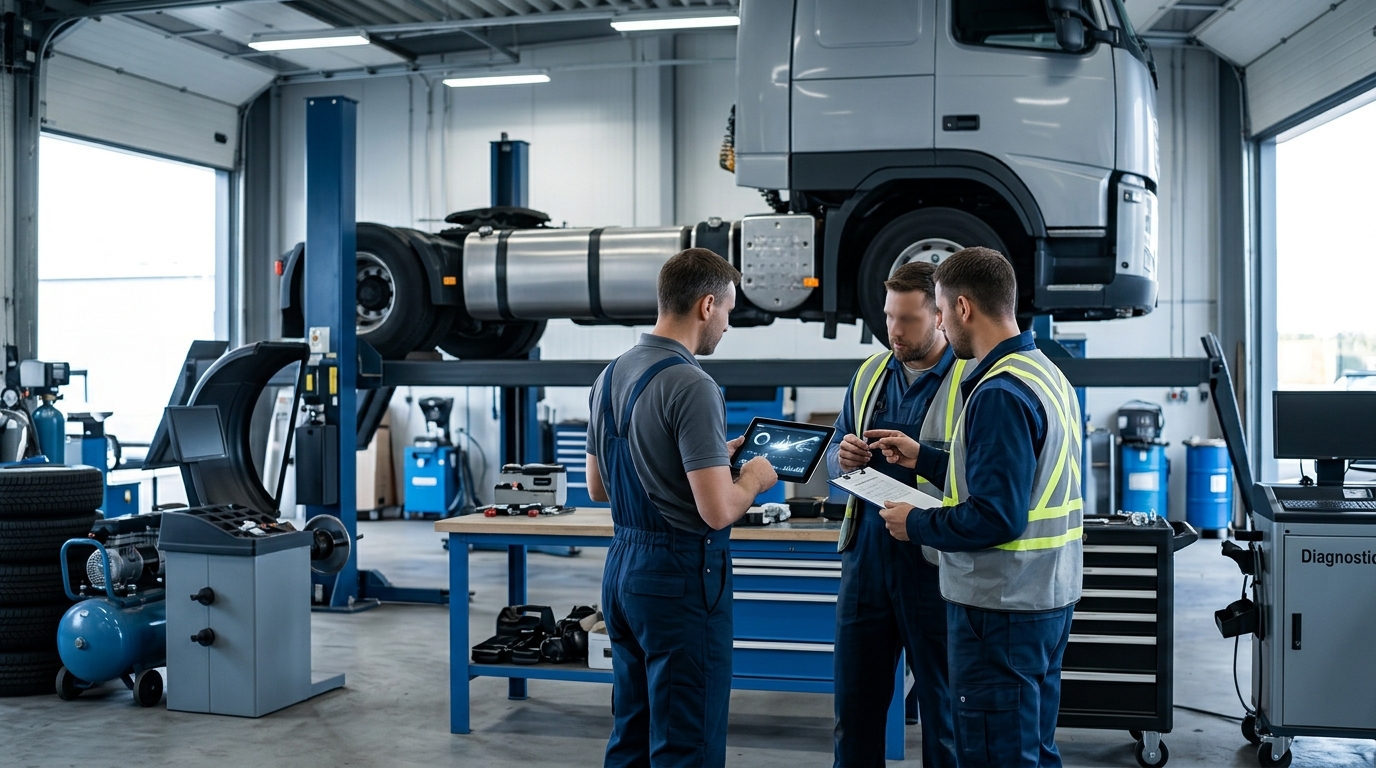
How do I secure funding for auto repair shop equipment financing 2026? You can secure funding by providing a formal invoice from an equipment dealer to a specialized lender who requires at least six months of active business operations. Click here to see if you qualify for current funding offers. When you are looking for auto repair shop equipment financing 2026, speed is usually the primary factor. Most independent shops cannot afford a four-week wait for an SBA loan when a critical hydraulic lift fails. Instead, many owners turn to equipment-specific lenders who can approve funding within 48 hours. These lenders treat the piece of machinery—whether it is a heavy-duty alignment rack or a proprietary diagnostic scanner—as the primary collateral. Because the lender holds a lien on the asset, they are less concerned with a temporary dip in your shop's net profit. Expect to provide a copy of the equipment quote, your last three months of business bank statements, and a basic one-page application to get the ball rolling. In this high-demand year, equipment costs have stabilized, making it easier to lock in fixed-rate contracts that protect your shop from inflationary spikes. If you are replacing a legacy lift or upgrading your diagnostic bays, ensure your quote includes delivery and installation costs, as most equipment lenders will bundle those into the total financed amount. If you are an owner-operator with a solid track record of revenue, the process is streamlined to avoid the mountains of paperwork common with traditional bank term loans. Most funding partners prioritize shops that have established vendor relationships with major equipment manufacturers, as this signals to the lender that the equipment is reputable and holds resale value. By focusing on asset-backed lending, you effectively separate your shop's overall business credit from the specific equipment needs, allowing for a faster capital injection without liquidating your operating reserve.
How to qualify
- Time in Business: Most lenders mandate a minimum of 6 months of operational history. If you are a startup, be prepared to show a solid business plan and a down payment of at least 20 percent. 2. Credit Score: While some lenders accept scores as low as 550 for bad credit business loans for mechanics, a score of 650 or higher typically unlocks significantly lower interest rates and longer repayment terms. 3. Revenue Thresholds: You should be able to demonstrate at least $10,000 to $15,000 in monthly gross revenue. Lenders want to see consistent cash flow that covers the new monthly payment with room to spare. 4. Documentation: Have your EIN, last two years of business tax returns, and three months of recent bank statements ready. Some lenders may ask for a personal guarantee or a UCC filing on your business assets. 5. Equipment Specifications: Provide a formal invoice from an authorized dealer. Lenders need to see the exact make, model, and serial number of the asset they are financing to determine its resale value. 6. Business Legal Status: Ensure your business is registered as an LLC, S-Corp, or C-Corp in your state. Sole proprietorships are sometimes eligible but often face stricter scrutiny regarding personal financial liability. When you prepare these documents, organize them into a digital folder before beginning your application. This preparation allows you to respond to underwriter questions immediately. If your shop is a newer entity, include a copy of your commercial lease agreement, as this proves your physical footprint and long-term commitment to the location, which is a major factor for risk assessment. Avoid submitting multiple applications simultaneously, as hard credit inquiries can temporarily lower your score and affect your approval chances.
Lease vs Buy: Making the Decision
| Feature | Leasing Equipment | Purchasing Equipment |
|---|---|---|
| Upfront Cost | Low (0-10% down) | High (20-30% down) |
| Ownership | Returns to lender | You own the asset |
| Tax Impact | Monthly payment expense | Section 179 depreciation |
| Flexibility | Easy to upgrade tech | Fixed until paid off |
The choice between leasing and buying depends on your shop's tax strategy and liquidity needs. Use a lease if you plan to upgrade diagnostic equipment every 24 months, as this allows you to trade in older tech without a massive capital outlay. Buy if you plan to keep the equipment for the duration of its useful life, typically 10 years for a commercial-grade lift, as this provides full ownership and no end-of-term obligations. Pros of Buying: You own the asset outright, you gain equity in your shop, and there are no mileage or usage restrictions. You can take advantage of Section 179 tax deductions to write off the full purchase price in the first year. Cons of Buying: Higher initial cash requirements for down payments and sales tax. Pros of Leasing: Lower monthly payments keep your working capital free for labor costs and unexpected repairs. Upgrading to newer tech at the end of the term is streamlined. Cons of Leasing: You do not build equity, and the total cost of ownership is often higher due to interest accumulation over the term. For most shops, the primary driver is cash flow. If you are in a growth phase, leasing keeps your bank account healthy. If you are stabilizing, buying builds long-term net worth.
Is heavy duty lift equipment leasing better than a term loan? Leasing is generally better if you need to protect your liquid cash for daily operations, while term loans are ideal for long-term capital assets like heavy-duty lifts that you intend to keep for the next decade. What are the common diagnostic scanner financing options? You can access manufacturer-backed financing or third-party equipment loans specifically for scanners, which often feature shorter 12-to-24-month terms due to the rapid obsolescence of diagnostic technology. Can I get bad credit business loans for mechanics if my score is under 600? You can still qualify for equipment-backed financing with a lower credit score, provided your shop generates at least $15,000 in monthly revenue and you are willing to provide a higher down payment or shorter term.
Understanding Capital Mechanics
Equipment financing is a type of commercial credit that uses the machinery itself as the underlying collateral. This structure is what makes the process significantly faster than traditional SBA loans or conventional bank credit lines. When you finance a piece of gear, the lender places a UCC-1 lien on that specific item. If the business fails, the lender repossesses the asset to recoup their investment, which lowers their risk profile and allows them to approve applicants with lower credit scores. In 2026, the industry has seen a shift toward digital-first underwriting. According to the Small Business Administration (SBA), accessible credit remains a primary barrier for independent repair shops looking to modernize their facilities to handle electric vehicle (EV) repairs. Furthermore, data from the Federal Reserve Economic Data (FRED) indicates that equipment investment rates fluctuate based on interest rate cycles, making fixed-rate financing more attractive for shop owners who want to hedge against future rate hikes. Why does this matter for your shop? Because shop expansion loans for mechanics are not just about buying tools—they are about capacity. A new alignment rack can increase your daily bay turnover by 20%, directly impacting your bottom line. By leveraging equipment-specific funding, you preserve your working capital for inventory and payroll, which are the two most volatile expenses in an auto repair business. Most owners find that using a mix of short-term equipment leases and a revolving business credit line provides the best balance of debt management and operational agility. When you apply, ensure that you are comparing the total cost of capital rather than just the monthly payment, as many "low payment" leases include balloon payments at the end that can catch a shop owner off guard. Always confirm if the financing agreement includes an early buyout option, as this provides you with the flexibility to pay off the debt early if your shop has a high-profit season.
Bottom line
Securing the right financing in 2026 allows your shop to scale capacity without depleting your essential cash reserves. Assess your immediate needs, compare your leasing and loan options, and check your eligibility to get started today.
Disclosures
This content is for educational purposes only and is not financial advice. mechanics.news may receive compensation from partner lenders, which may influence which products are featured. Rates, terms, and availability vary by lender and applicant qualifications.
Ready to check your rate?
Pre-qualifying takes 2 minutes and won't affect your credit score.
See if you qualify →Frequently asked questions
What is the fastest way to get equipment funding for an auto shop?
The fastest method is applying for asset-backed equipment financing, which often results in approval within 48 hours because the equipment serves as its own collateral.
Do I need perfect credit to finance a car lift?
No, you do not need perfect credit. Many specialized lenders work with shop owners who have credit scores as low as 550 by focusing on business revenue and the value of the equipment.
Should I choose a lease or a loan for my new shop tools?
Choose a lease if you want to keep monthly payments low and upgrade equipment frequently; choose a loan if you want to own the asset outright and leverage tax benefits like Section 179.
Can I finance installation and delivery costs?
Yes, most reputable equipment lenders will bundle installation, shipping, and even training costs into your total financing package, provided you include these figures in your formal quote.