Lease vs Buy Auto Shop Equipment: 2026 Financial Analysis
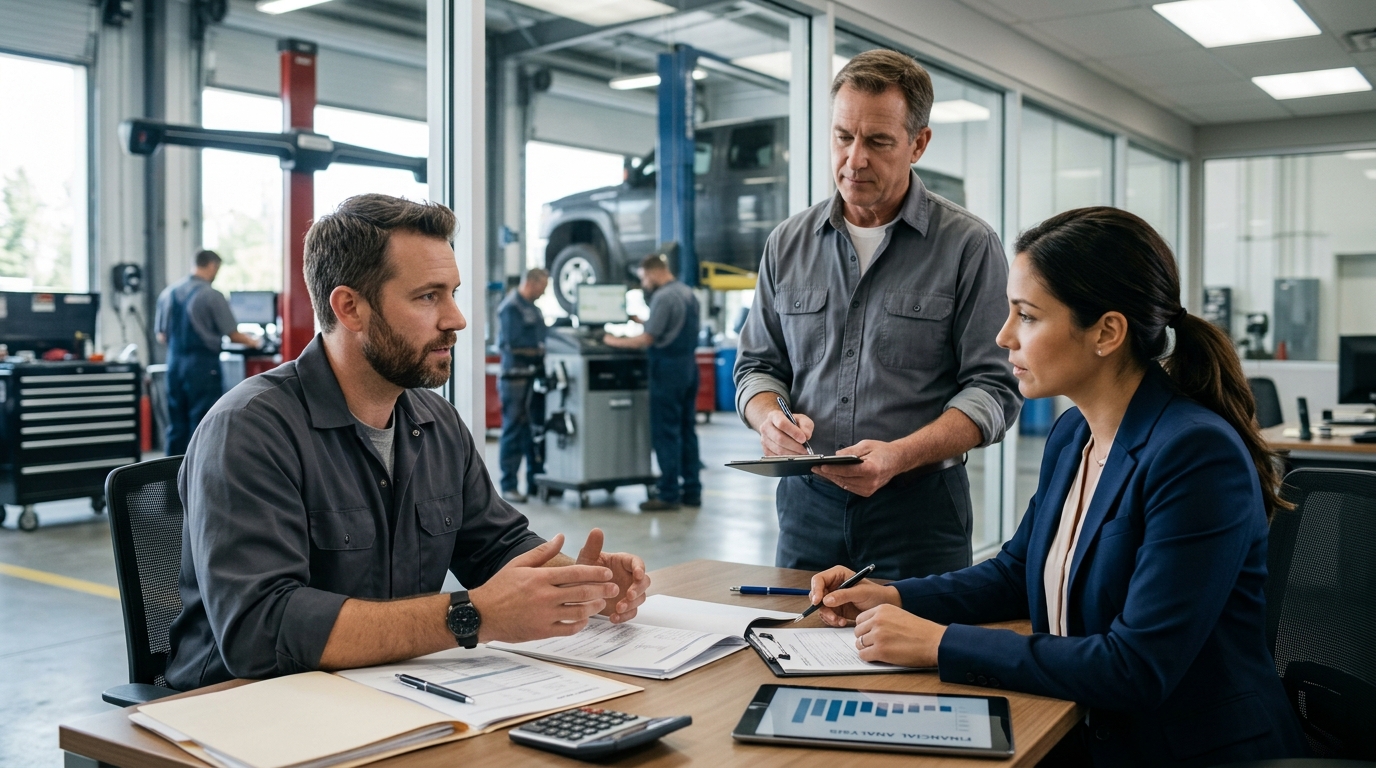
Should I lease or buy my shop equipment in 2026? Most independent shops should purchase diagnostic scanners and smaller tools with cash or short-term credit, while reserving heavy-duty lift equipment leasing for high-cost, depreciating assets that require predictable monthly payments. Click here to check your current financing eligibility and view rates. When you look at auto repair shop equipment financing 2026, the primary factor isn't just the sticker price; it is the total cost of ownership over the equipment's lifespan. Purchasing a $50,000 alignment rack requires significant upfront capital, which could instead be used for hiring a technician or marketing. Leasing provides a way to acquire that same rack for a fixed monthly fee, often between $900 and $1,400 depending on your credit profile. You must calculate if the revenue generated by that rack exceeds your monthly payment. For essential tools like scanners, the technology changes rapidly. Leasing a top-tier diagnostic scanner often makes more sense because it allows you to upgrade to the latest software and hardware every 24 to 36 months without holding onto obsolete junk. Conversely, a heavy-duty hydraulic lift is a structural asset that stays relevant for a decade. Financing a lift with a traditional loan allows you to own the asset outright, which eventually improves your business balance sheet and allows you to capitalize on long-term depreciation tax benefits under Section 179.
How to qualify
- Establish a minimum credit score of 620. While bad credit business loans for mechanics exist, lenders prioritize scores above 650 for the best interest rates. If your score is below 600, prepare for down payments of 20% or higher and shorter repayment terms.
- Verify your time in business. Most lenders require at least two years of operation. If you are seeking auto repair shop startup capital, you will likely need a personal guarantee and a rock-solid business plan showing projected cash flow.
- Gather your financial statements. Prepare the last three months of business bank statements, a year-to-date profit and loss statement, and a balance sheet. Lenders want to see consistent monthly revenue, ideally exceeding $15,000 to $20,000 for independent shops.
- Document your equipment specs. Have the invoice or quote ready for the specific gear you are purchasing. Having a clear "use case"—such as how a new heavy-duty lift increases your shop's throughput—helps underwriters approve your request faster.
- Maintain a debt-to-income ratio that allows for expansion. Lenders check your current obligations to ensure you can handle additional mechanic business loan rates. If you already have several lines of credit open, pay down smaller balances before applying to improve your chances of securing favorable terms.
Comparing Purchase vs. Lease Strategies
Choosing between buying and leasing is a balance between cash flow management and long-term equity. Use the payment-calculator to see how different interest rates affect your monthly overhead. When you buy, you own the asset once the final payment is made. This is excellent for heavy-duty machinery that doesn't go obsolete quickly. However, the purchase price puts a direct strain on your working capital. Leasing, specifically guide-lift-equipment-leasing, keeps your monthly costs predictable and protects your cash reserves. The downside is that you never own the equipment, and the total payments over the lease term usually exceed the purchase price. Evaluate your shop's growth trajectory. If you are in a heavy growth phase, leasing allows you to bring in more tools faster without exhausting your credit lines. If you are an established shop with steady profit, purchasing is generally cheaper over the long run because you avoid the interest premiums baked into lease agreements.
Is it better to use a business credit line or an equipment loan? A business line of credit is ideal for flexible, variable expenses like parts or emergency repairs, whereas an equipment loan is specifically structured for high-cost assets with fixed, predictable payments over 3-7 years.
Can I finance shop equipment with bad credit? Yes, several lenders specialize in equipment financing for independent auto shops with credit scores as low as 550, though expect higher interest rates and mandatory down payments ranging from 10% to 30%.
Do SBA loans offer better rates for mechanic shops? SBA 7(a) loans typically offer the lowest mechanic business loan rates in 2026, often 2-4% lower than private equipment lenders, though the application process can take 60 to 90 days.
Understanding the financing landscape
Financing is the lifeblood of the modern repair shop. Unlike retail, auto repair relies on heavy, durable goods that depreciate over time but generate steady service revenue. According to the Small Business Administration (SBA.gov), access to capital is the single largest indicator of longevity for small trade businesses as of 2026. This is because shops that fail to update their diagnostic tools often lose their competitive edge, leading to a decline in repeat business. The data from the Federal Reserve (FRED.stlouisfed.org) suggests that total commercial lending to the automotive service sector has increased by 12% in early 2026, signaling that owners are investing heavily in new technology to meet the demands of advanced vehicle systems. Financing acts as a bridge. By spreading the cost of a $100,000 garage renovation or equipment upgrade over five years, you align the cost of the asset with the revenue it helps generate. This concept, known as "matching principle" in accounting, ensures that your monthly service billings contribute to the debt service, keeping your operation cash-flow positive. Whether you use a bank loan, an SBA product, or a private equipment leasing agreement, the goal is always to keep your effective annual rate low while maintaining enough liquidity to cover unexpected overhead.
Bottom line
Choosing the right financing path in 2026 requires balancing your need for current cash against the long-term cost of your equipment. Review your shop's monthly cash flow and equipment utility today to decide if leasing or buying provides the best return on your investment.
Disclosures
This content is for educational purposes only and is not financial advice. mechanics.news may receive compensation from partner lenders, which may influence which products are featured. Rates, terms, and availability vary by lender and applicant qualifications.
Ready to check your rate?
Pre-qualifying takes 2 minutes and won't affect your credit score.
See if you qualify →Frequently asked questions
What is the best way to finance auto repair shop equipment?
The best method depends on your credit and cash flow. For immediate needs, equipment leasing is fastest, while SBA loans offer the lowest interest rates for long-term expansion.
How does equipment financing affect my taxes?
Under Section 179 for 2026, you can often deduct the full purchase price of qualifying equipment from your gross income, significantly reducing your tax liability.
What credit score do I need for a mechanic equipment loan?
Most lenders look for a score of at least 620 to 650, though sub-prime options exist for those with lower scores if you are willing to accept higher interest rates.
Should I lease or buy a diagnostic scanner?
Leasing is generally preferred for scanners due to rapid software and hardware evolution, ensuring you can upgrade to the latest tech every two to three years.