Financing Auto Repair Shop Equipment: Your 2026 Strategy for Growth
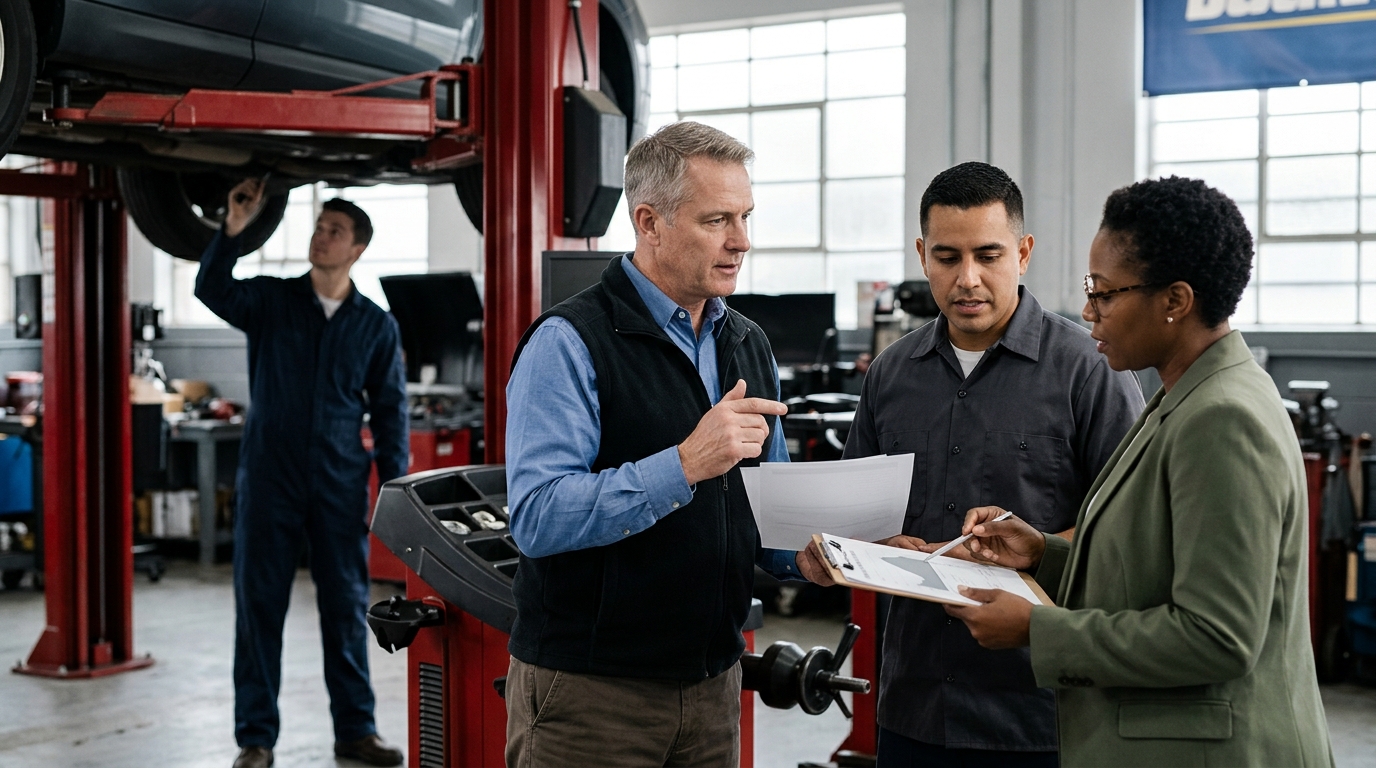
How can I secure financing for new auto repair shop equipment in 2026?
You can secure financing for shop equipment by choosing between an equipment loan or a lease, provided you have at least 6 months of operating history and $150,000 in annual revenue. To start the process immediately, assess your current equipment needs and prepare your tax returns for the last two years to see if you qualify for competitive rates today.
Securing capital for an independent auto shop is less about finding 'any' loan and more about matching the asset lifecycle to the debt term. For expensive, long-term investments like heavy-duty alignment lifts or frame racks, equipment financing allows you to spread the cost over five to seven years. This preserves your cash flow for daily operations, such as purchasing parts or paying technician salaries. Unlike general working capital loans, equipment financing is secured by the asset itself. This lowers the risk for the lender, which often results in lower interest rates—sometimes as low as 6% to 9% for well-qualified borrowers. If you are looking at diagnostic scanner financing options, the term is typically shorter, reflecting the faster technological obsolescence of digital tools. By aligning your debt with the useful life of the machine, you ensure that the equipment pays for itself through increased bay productivity rather than bleeding your monthly cash reserves.
How to qualify
Qualifying for auto repair shop equipment financing in 2026 relies on a structured approach to your business financials. Lenders in this niche prioritize predictability and asset value over pure historical profit.
- Time in Business: Most lenders require a minimum of six months of operation. If you are a startup, you may need a personal guarantee or a larger down payment (often 20-30%). Established shops with two-plus years of history get the best rates.
- Credit Score Thresholds: While bad credit business loans for mechanics exist, you pay a premium for them. A personal FICO score of 650 or higher typically unlocks standard equipment loans. If your score is below 600, expect interest rates to climb significantly or to be pushed toward high-rate short-term capital.
- Revenue Verification: You must show at least $150,000 to $200,000 in annual gross revenue. Be prepared to provide business bank statements from the last three to six months.
- Debt-to-Income Ratio: Lenders check if your existing monthly debt payments exceed 40-50% of your gross monthly income. If you are overextended, pay down smaller credit lines before applying.
- Documentation: Have your last two years of business tax returns, current year-to-date profit and loss statements, and the invoice or quote for the equipment ready. Lenders need to see the 'hard cost' of the lift or scanner you intend to buy.
Lease vs Buy Decision Table
| Feature | Equipment Loan (Buy) | Equipment Lease |
|---|---|---|
| Ownership | You own it from day one | Lender owns it; you use it |
| Tax Impact | Section 179 deduction allowed | Lease payments are deductible |
| Monthly Cost | Higher payments | Lower, more flexible payments |
| End of Term | It is yours | Buyout, return, or upgrade |
For independent shops in 2026, the choice usually hinges on your cash flow situation. If your primary goal is maximizing tax advantages, buying through a loan allows you to use Section 179 depreciation immediately, effectively writing off the full purchase price against this year's income. This is excellent for high-profit years. Conversely, if you prioritize flexibility and low monthly out-of-pocket costs, leasing is superior. A lease is particularly useful for diagnostic equipment that becomes obsolete every three years. By leasing, you can swap old scanners for the latest version without being tied to an asset that has lost its value. Before signing, calculate the total cost of ownership, including the buyout fee, to ensure you aren't overpaying for the privilege of lower monthly installments.
What are the best mechanic equipment lenders in 2026? A reputable lender specializes in heavy-duty shop equipment, offering terms tailored to the automotive industry rather than generic business loans; look for companies that specifically mention 'automotive' or 'industrial' financing in their underwriting criteria to avoid unnecessary paperwork and misunderstandings about the value of your collateral.
Can I get a shop expansion loan if my business credit is limited? Yes, you can often secure financing for an expansion or facility upgrade using a personal guarantee or by pledging existing, unencumbered shop assets as collateral, though this will usually result in higher interest rates compared to a standard equipment loan.
How does working capital differ from equipment financing? Working capital is short-term funding meant to cover day-to-day operational expenses like payroll, inventory, or emergency repairs, while equipment financing is a longer-term product specifically tied to the purchase of a fixed asset like a lift, welder, or specialized tool set.
Background: Understanding Business Capital in the Auto Industry
Auto repair shop equipment financing functions as a specialized branch of commercial lending. At its core, it is collateral-based lending. Because the equipment—such as a heavy-duty lift or a sophisticated diagnostic computer—has tangible resale value, lenders are more willing to extend funds to shop owners who might have limited credit histories. This is the cornerstone of how independent shops scale; they use the equipment to increase revenue, and the lender takes a security interest in that equipment to mitigate risk.
In the current market, the dynamics of shop financing are shifting. According to the U.S. Small Business Administration (SBA.gov), access to capital remains the single most significant barrier to entry and expansion for small businesses in the skilled trades sector as of 2026. This reflects a broader trend where traditional banks are tightening lending standards, pushing many mechanics toward alternative lenders and fintech platforms. Furthermore, data from the Federal Reserve Economic Data (FRED.stlouisfed.org) suggests that total commercial and industrial loan volume has fluctuated significantly in the first half of 2026, indicating that lenders are being more selective regarding the quality of business assets they finance.
For an auto repair owner, understanding these shifts is vital. You are not just buying a piece of machinery; you are entering a credit agreement that defines your shop's agility. When you use equipment financing, you are leveraging the asset's utility to generate profit. This is fundamentally different from taking out a high-interest line of credit to cover a slow month of business. By distinguishing between debt used for growth (equipment) and debt used for survival (working capital), you protect your shop's long-term financial health.
Bottom line
Investing in modern equipment is the only way to remain competitive in today's repair market. Assess your current capacity, gather your financials, and seek financing that aligns with your shop's long-term growth goals.
Disclosures
This content is for educational purposes only and is not financial advice. mechanics.news may receive compensation from partner lenders, which may influence which products are featured. Rates, terms, and availability vary by lender and applicant qualifications.
Ready to check your rate?
Pre-qualifying takes 2 minutes and won't affect your credit score.
See if you qualify →Frequently asked questions
What is the typical term length for auto repair shop equipment financing?
Terms generally range from 24 to 72 months, depending on the type of equipment and its expected lifespan.
Can I get equipment financing if I have bad credit?
Yes, but you will likely face higher interest rates and may need to provide a larger down payment or a personal guarantee.
What documents do I need to apply for an equipment loan?
You typically need 3 months of business bank statements, 2 years of tax returns, and a formal quote from the equipment vendor.
Is it better to lease or buy shop equipment?
Buying is better for long-term assets you will keep for years (like lifts); leasing is better for rapidly evolving technology (like scanners).