Used shop equipment financing in 2026: when buying refurbished is the smarter capex
On lifts, alignment racks, and tire changers, a well-refurbished unit with documented service history typically saves 35-55% off new. Lenders will finance them; the rules are stricter.
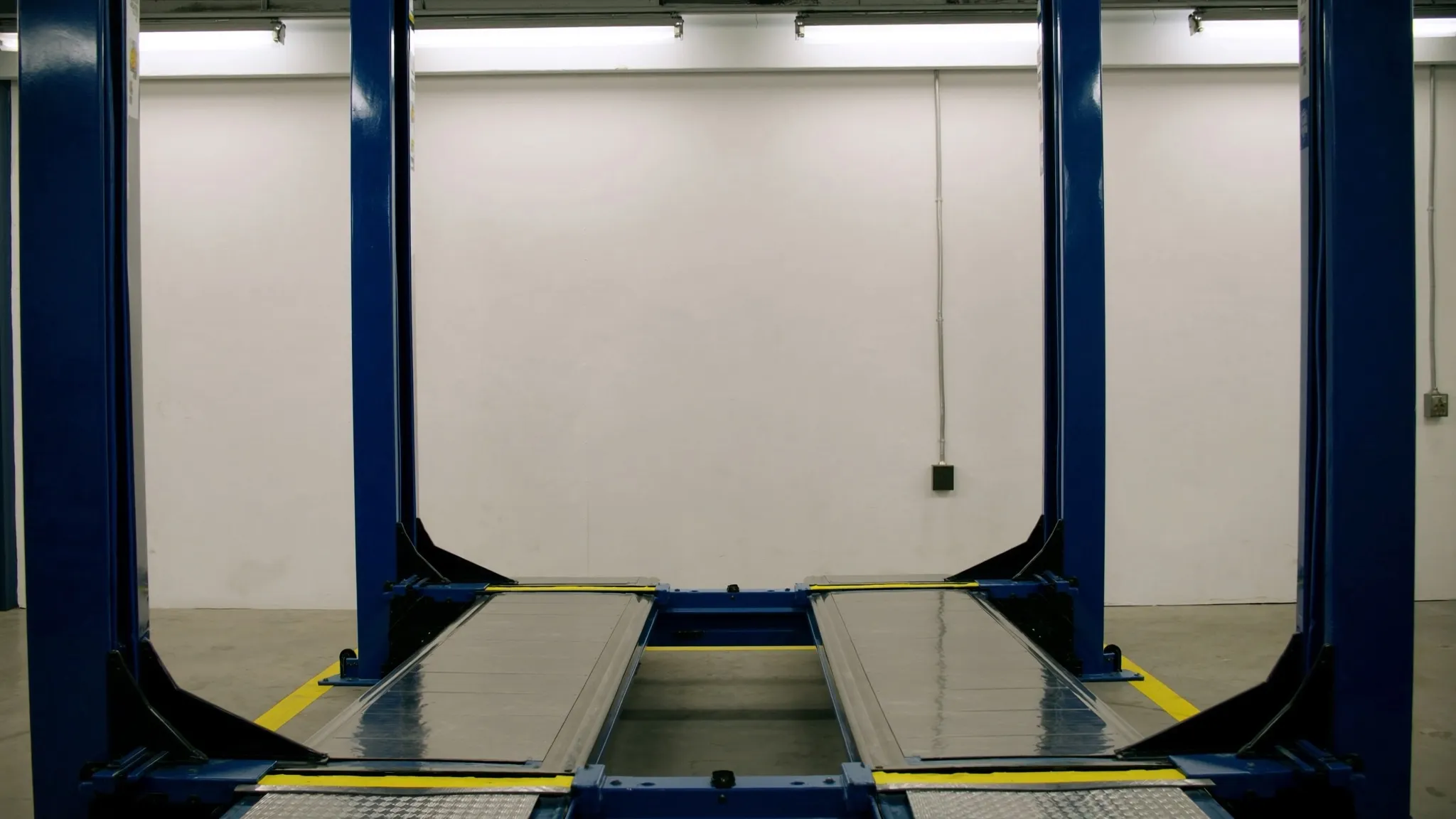
Most shop owners walk past used equipment without doing the math. The new-equipment quote lands on the desk, the financing terms are clean, the warranty is intact, and the decision gets made on the path of least friction. A well-refurbished two-post lift with documented service history saves the buyer somewhere between 35 and 55 percent off the comparable new unit, and the underlying mechanics — hydraulics, posts, arms — are essentially the same equipment a buyer would be financing new in 2027 or 2032. On the right categories, the used path is the better capex decision more often than the industry buys it. The reason it doesn’t get bought more often is partly habit and partly that the financing side has stricter rules than most owners realize going in.
This article is about which categories actually pencil used, which categories don’t, and what the lender side of the trade looks like in 2026.
Which categories make sense used
Three characteristics make a piece of shop equipment a good used-buy candidate: mechanically simple at its core, long useful life (8 to 15-plus years with reasonable maintenance), and a software stack that’s either absent or independently updatable. The categories that fit all three are the ones where used wins consistently.
Two-post and four-post lifts. A lift is a hydraulic cylinder, a set of posts, arms, locks, and a control box. The structural metal doesn’t age out. The hydraulic side wears predictably and is straightforward to service. A 6-year-old lift with documented annual inspections and a hydraulic refresh is functionally indistinguishable from a new one for the next decade of service. The 35-to-55 percent savings band lands cleanly here, and the lenders that underwrite shop equipment know it.
Alignment racks. The mechanical platform — the rack, the turn plates, the slip plates — is built to outlast most of the shops it sits in. The software and camera head are the parts that age, and on most modern systems the software side updates independently of the rack itself. A refurbished rack with a current software subscription delivers the same throughput as a new one at a meaningful discount.
Tire changers and wheel balancers. These are mechanically simple machines that get refurbished routinely, often by OEM-certified shops that rebuild the air system, replace wear parts, and re-certify the unit. A factory-refurbished balancer with current calibration is operationally equivalent to new for most general-service and tire-shop applications.
Basic shop tooling. Press, brake lathe, parts washer, transmission jack. The mechanical core doesn’t change generation-to-generation in any way that affects the work, and the used market is deep.
The common thread: the part of the equipment that does the work is mechanical and durable, and any software layer either doesn’t exist or can be updated independent of the hardware.
Which categories don’t
The categories where used breaks down are the ones where software, regulatory compliance, or vendor lock-in dictate that the equipment ages out faster than the metal does.
Scan tools and ADAS calibration equipment. Coverage is the asset. A scan tool that was current in 2022 is missing late-model OEM coverage, current ADAS protocols, and EV high-voltage diagnostics. The hardware may work fine; the data behind it is what shops are actually paying for, and that ages out fast. The math on used here usually goes the wrong way once you price in the subscription required to bring coverage current — assuming the manufacturer still supports the unit at all.
A/C service machines. Refrigerant regulation has tightened. The A2L transition is underway, and older R-1234yf-only or R-134a-era machines are increasingly out of step with what a shop needs to service current-model-year vehicles. A used A/C machine that can’t be brought into compliance with current refrigerant handling is a machine that limits the work the shop can take in, regardless of what it cost.
Anything with a subscription that can brick the unit. A growing number of diagnostic and shop-management platforms tie the hardware to an active subscription tied to the original purchaser. Buying that equipment used can mean buying a paperweight if the subscription doesn’t transfer cleanly. The diligence on this is more legal than mechanical, and a lot of used buyers find out the wrong way.
The pattern is the inverse of the buy-used categories. Where software, regulation, or vendor policy controls usable life, the depreciation curve runs steeper than the discount.
What the lender side looks like
Lenders will finance used shop equipment. The terms are tighter than new, and the diligence is more involved, but the products exist and they’re priced reasonably given the asset profile. A few rules of thumb that hold across most of the shop-specialty equipment financing programs that handle used purchases in 2026:
Rate. Used equipment financing typically runs roughly 9 to 16 percent in mid-2026, a notch above the 7 to 14 percent range on new. The spread reflects the additional underwriting work on the asset side and the fact that the resale floor on used equipment is harder to model than on new.
Age caps. Most lenders have an age limit on the equipment at funding date — commonly somewhere around 10 to 12 years for lifts and alignment, with tighter limits on tire equipment that turns over faster. The exact ceiling varies lender to lender. The relevant signal is that “older than the cap” usually means “not financeable through this product,” which is the constraint to size the search against before falling in love with a specific unit.
Condition and inspection. Lenders generally want to see operational verification — the unit running under load, hydraulics holding, control electronics functional. Documented service history matters. On larger purchases or older units, a third-party inspection report is often part of the package, which adds cost and a few days to the timeline but is straightforward to arrange through any shop-equipment specialist.
Term. Used-equipment financing typically runs shorter than new — 36 to 48 months is common, versus 60 to 84 months on a comparable new unit. Lenders match the amortization to remaining useful life, which is a sensible underwriting frame even if it pushes the monthly payment up relative to a longer-term new loan.
The practical implication is that the financing math on used isn’t just discount-minus-rate-premium. The shorter term moves the monthly payment closer to the new equivalent than the headline savings suggest, even though the total cost of ownership still comes out meaningfully lower.
Refurbished, as-is, auction: what each looks like
Used equipment isn’t a single category from a lender’s perspective. Three buying paths, three different financing experiences.
OEM-certified refurbished. The unit has been rebuilt by the original manufacturer or an authorized partner, with wear parts replaced and a limited warranty issued against the refurbishment work. Lenders treat this category closest to new — cleanest paperwork, most reliable resale floor, lowest friction on approval. The price is closer to new than the as-is or auction paths, but the discount is still typically 25 to 40 percent.
Third-party refurbished or independent dealer. A reputable used-equipment dealer rebuilds the unit, documents the work, and stands behind it with some form of warranty or guarantee. Lenders will finance this category, often with an inspection requirement and a slightly tighter age cap than on OEM-certified equipment. The discount widens — 40 to 55 percent off new is realistic — and the diligence burden moves to the buyer.
As-is or auction. Bought as-it-sits from a closed shop, an auction lot, or an end-user seller, with no warranty and no rebuild documentation. Lenders are more cautious here. Some won’t finance it at all. Others will finance with a mandatory third-party inspection and a tighter age cap. The headline discounts are the largest — sometimes 50-plus percent off new — but the risk also sits with the buyer, and the unit may need work before it earns revenue.
The right path depends on the buyer’s tolerance for diligence work and on the specific category. A shop owner buying a single lift to add capacity probably wants OEM-certified or reputable-dealer refurbished. A multi-bay operator outfitting a new location may have the bandwidth to chase auction deals on lifts and racks where the math justifies the work.
The hybrid play
The strategy that’s working for most general-service shops in 2026 is a hybrid: buy used on the long-life mechanical equipment, buy new on the fast-aging diagnostic and software-dependent gear. A 2018-era refurbished alignment rack paired with current-year alignment software and a brand-new scan tool delivers the same workflow as an all-new build at materially lower capex. The lift bay is refurbished; the diagnostic cart is new. The numbers compound across a multi-bay buildout.
For shops that want to keep monthly capex predictable rather than financing the used equipment outright, equipment leasing on the fast-aging categories pairs naturally with the used-buy-and-own approach on the mechanical side. Own the equipment that holds its value for a decade. Lease the equipment that ages out in three to four years. The total cost of operating the shop comes down, and the cash position stays cleaner.
The bottom line
Used shop equipment isn’t a fallback for owners who can’t afford new. On the right categories, it’s the better capex decision. The 35-to-55 percent discount on lifts, alignment racks, and tire equipment is real, the underlying mechanical life still has a decade or more in it, and the lender side will finance it — at a modest rate premium, on shorter terms, with stricter diligence. Where used breaks down is on the software-heavy and regulation-exposed categories, where the depreciation curve runs faster than the discount can keep up with. The shop owners getting this right in 2026 are running the hybrid: used on the long-life mechanical side, new on the fast-aging diagnostic side, and a financing stack that matches each asset to a product sized against its actual useful life.