Tire shop inventory financing in 2026: how floor-plan facilities actually work
Floor-plan financing carries inventory for tire shops at 0-4% over prime in 2026, but the working-capital math is more nuanced than the headline rate suggests. Here's how it actually stacks.
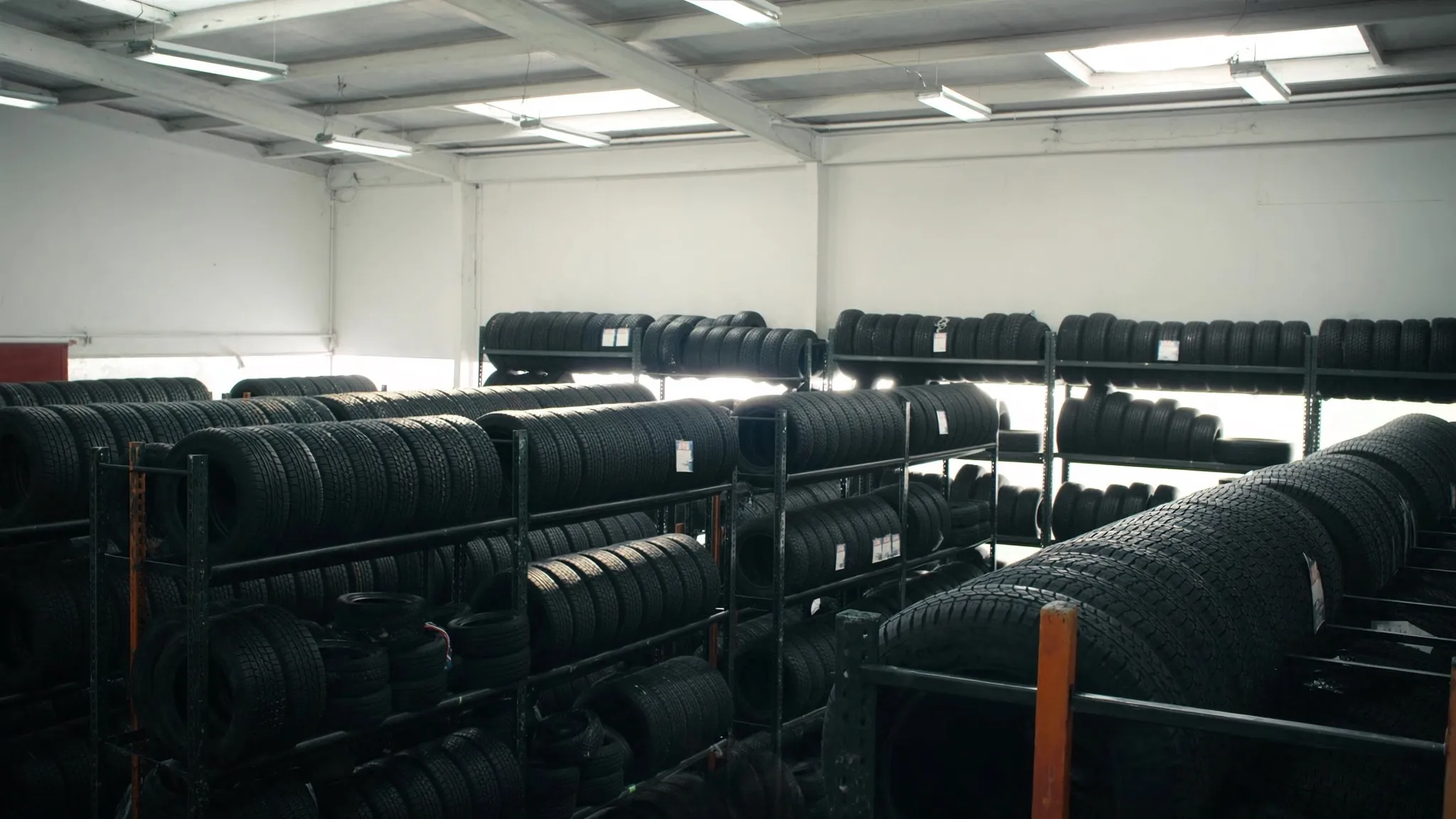
Floor-plan financing is a revolving credit facility a lender extends against tire inventory specifically — the lender pays the manufacturer’s invoice, the tires sit on the shop’s racks as collateral, and the shop pays the line down as the tires sell. For a growing tire shop, it solves a working-capital problem that gets worse as the shop gets bigger: tire stock at 30-day manufacturer terms eats cash fast, and a busy spring or fall changeover season can pull a shop into a hole that the next month’s receipts only partly fill. The headline cost is attractive — 0 to 4 percent over prime, which puts the 2026 range at roughly 6.75 to 10.75 percent against a 6.75 percent prime rate. The all-in cost, once curtailment, audits, and insurance riders are stacked on top, sits somewhere different. This article is about how the mechanics actually work and where the real cost lives.
What a floor-plan facility actually does
The structural mechanics are straightforward once you separate the line from a generic working-capital revolver. When the shop places an inventory order with a tire manufacturer or distributor, the invoice routes to the floor-plan lender rather than to the shop’s operating account. The lender pays the vendor within terms — usually inside the manufacturer’s net-30 window, which keeps the shop in good standing on its trade account. The advanced amount becomes a draw against the floor-plan line, secured by the specific tires the invoice covers. Each tire (or each invoice, depending on the lender’s tracking model) carries its own draw, its own clock, and its own payoff trigger.
When a tire sells, the shop is obligated to remit payoff on that unit’s draw within a defined window — typically the next billing cycle, sometimes faster depending on the facility. That’s the “sold and unpaid” risk a floor-plan lender is most attentive to: inventory that has left the shop without the corresponding draw being cleared. Auditors check for it directly.
Curtailment, audits, and the slow-mover problem
Three mechanics drive the gap between headline rate and all-in cost.
Curtailment. Every draw has a maximum age before the lender requires principal reduction. If a tire hasn’t sold within a defined window — commonly 90 or 120 days, set by the lender and the SKU category — the shop has to start paying the line down on a scheduled basis whether the unit has moved or not. Curtailment is usually expressed as a small monthly fee or a scheduled principal reduction against the draw, not as an annualized rate, which is why it doesn’t show up cleanly in the headline pricing. It’s the lender’s mechanism for ensuring the line doesn’t become a permanent loan against aging stock the shop hasn’t sold.
The practical effect for a tire shop: SKUs that turn fast cost very little under the curtailment schedule. SKUs that sit — odd sizes, specialty performance tires, EV-specific units stocked ahead of demand — accumulate curtailment payments that the shop is funding out of operating cash regardless of whether the tire has sold. A floor-plan line is cheap on fast-moving inventory and progressively less cheap on slow-moving inventory, and that’s by design.
Audits. Floor-plan lenders verify collateral physically. An auditor visits the shop on a defined schedule — quarterly is common, monthly for larger lines — and walks the inventory against the lender’s draw ledger. Tires the lender has on the books need to be on the racks or accounted for as sold and remitted. Discrepancies — sold-and-unpaid units, missing serial numbers, units the shop has moved between locations without notifying the lender — trigger a cure period and, if unresolved, default treatment on the line. Audit fees are typically passed through to the shop and run as a line item separate from the rate.
Insurance. Lenders require the inventory to be insured against fire, theft, and casualty for the full collateral value, with the lender named as loss payee. Most shops already carry commercial property coverage, but the floor-plan facility usually requires a rider or a coverage increase tied to peak inventory levels. That cost lands on the shop’s insurance bill and not on the lender’s rate sheet, which is again why it doesn’t appear in the headline number.
Stack the three on top of the rate spread and the all-in cost of a floor-plan facility runs meaningfully higher than the prime-plus-0-to-4 quote. It’s still cheap capital relative to a working-capital line at 12 to 22 percent APR for the inventory use case specifically. But the gap between the headline and the all-in is large enough that a shop running the math should price it on a full-loaded basis before deciding it’s the right product.
Floor plan vs working-capital line: when each wins
A working-capital revolver and a floor-plan line are not interchangeable products even though both fund inventory in a technical sense. The cash-cycle math separates them cleanly.
A working-capital line funds the gap between paying for tires and getting paid by the customer — it’s general-purpose, draws against the line are not tied to specific invoices, and the shop can use the funds for anything. The cost in 2026 runs 12 to 22 percent APR for trade-aware programs. A floor-plan line funds inventory specifically, with each draw secured by the unit it paid for, at 6.75 to 10.75 percent before curtailment and fees.
For a shop with high inventory turn and a predictable cash cycle, the working-capital line is often the right answer despite the higher rate, because it’s simpler, has no audit requirement, and doesn’t carry curtailment risk on slow-moving SKUs. For a shop carrying meaningful inventory at any point in the cycle — large bay counts, multi-location footprint, heavy seasonal stockpiling ahead of spring or winter changeover — the floor-plan line’s rate advantage on the inventory-specific draws is large enough that running both products in parallel is usually the cleanest structure. Inventory financing on the floor-plan side; payroll, parts, and operating overhead on the working-capital side.
Floor plan vs extended vendor terms
The other comparison that matters is against the manufacturer’s own credit terms. Most tire manufacturers offer extended terms — net-60 or net-90 instead of net-30 — to dealers who meet volume thresholds or who participate in program tiers. Extended vendor terms are functionally a no-cost loan from the manufacturer for the additional days, which makes them the cheapest inventory capital available when the shop qualifies and when the volume justifies the program commitment.
The trade-off: vendor programs come with strings. Volume commitments, brand exclusivity on certain product lines, mandatory inventory minimums on slow-moving categories, participation in cooperative advertising at defined spend levels. For a shop whose product mix aligns with one manufacturer’s program, the math on extended terms beats a floor-plan line on the units that fall under the program. For a multi-brand shop carrying four or five major manufacturers and a mix of specialty lines, no single vendor program covers the whole inventory book, and a floor-plan facility that spans the full vendor list is the structurally simpler answer.
The shops getting the best 2026 economics on inventory typically run both: extended vendor terms on the manufacturers where the volume justifies the program commitment, and a floor-plan line covering everything else. Tire shop financing programs that bundle inventory facilities with the shop’s equipment line underwrite this kind of multi-source inventory structure as a single relationship, which is the right structural fit when the inventory book spans multiple vendors and the shop is also financing equipment in the same cycle.
The equipment side runs on a separate program
A tire shop’s capex isn’t only inventory. The mounter, the road force balancer, the alignment system, the lift package, the TPMS tooling, and increasingly the EV-rated equipment for high-weight battery vehicles all need to be financed somewhere, and none of it fits on a floor-plan line. Floor-plan lenders underwrite inventory against vendor invoices; equipment is a separate underwrite against the equipment itself on terms of 24 to 84 months, with rates in the 7 to 14 percent range. Shop-specialty equipment financing programs read the tire-shop equipment mix specifically — including the shorter useful-life cycle on the diagnostic and TPMS side and the longer cycle on the lift and alignment side — in ways generic equipment lenders typically don’t. Running the inventory and equipment programs together with lenders that talk to each other simplifies the renewal cycle on both.
When a floor plan is the wrong answer
Three situations where a floor-plan facility is structurally the wrong product even though the rate looks attractive.
Low-volume single-bay shops. The fixed cost of a floor-plan facility — audit fees, insurance riders, and the operational overhead of tracking draws against units — doesn’t amortize cleanly over a small inventory book. A small shop that turns a modest tire inventory two or three times a year is usually better served by paying vendor invoices out of a working-capital line or out of operating cash.
Shops with strong vendor terms already in place. If the shop’s two or three main manufacturers already extend net-60 or net-90, and the inventory book lives substantially inside those programs, layering a floor-plan facility on top adds cost without solving a problem the vendor terms haven’t already solved. The math runs against the facility in this case.
Shops not growing their inventory commitment. A floor-plan line earns its place when inventory needs to scale faster than the shop’s cash can fund. A steady-state shop with flat inventory year over year is usually carrying enough operating cash to absorb the cycle without needing a financing product underneath it.
The bottom line
Floor-plan financing is the right inventory capital for tire shops that are growing their book, carrying meaningful stock across multiple vendors, and turning enough volume that the all-in cost — rate spread plus curtailment plus audit and insurance — sits comfortably below what a working-capital line would charge for the same inventory draw. It’s the wrong product for low-volume shops, shops already covered by strong vendor terms, and shops whose inventory isn’t scaling. The shops getting it right in 2026 are running the math on a fully-loaded basis before signing, not on the headline rate. The rate spread is only one input. The curtailment schedule, the audit cadence, and the insurance rider are the rest of the price, and they belong in the comparison before the line gets opened, not after the first quarterly statement lands.