When to replace the tire changer and balancer: the 2026 refresh-cycle math
A high-volume tire changer lasts 8-12 years; a balancer 7-10. In a bay running 25+ tires per day, the next-gen TPMS, runflat, and large-rim handling pays back the swap faster than most shops realize.
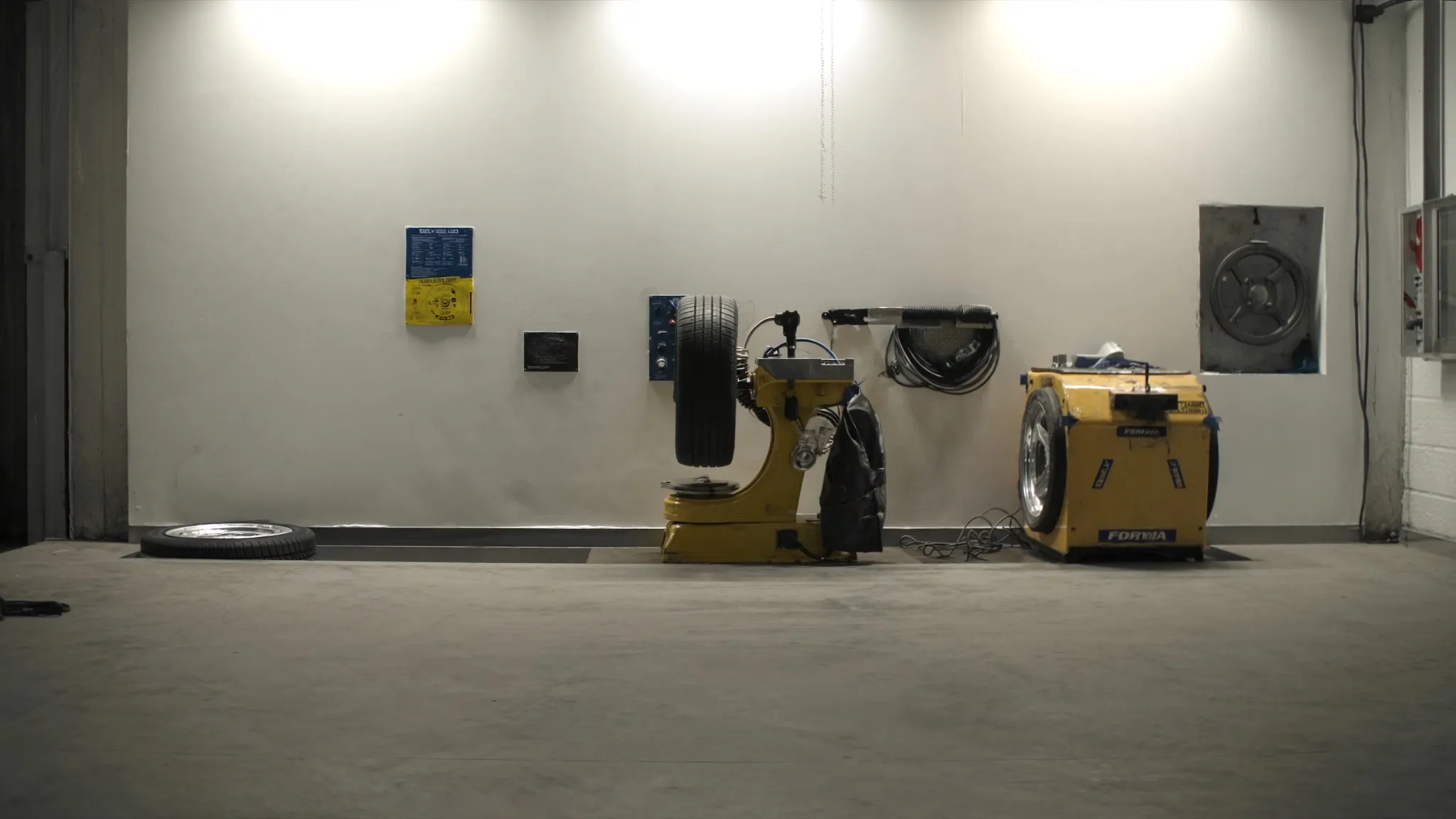
Tire changers and balancers are the two pieces of shop equipment most often run past their useful life. They sit in the bay, they still turn on, the tech still gets through the day on them, and nobody on the floor is asking for a replacement. The capex case quietly compounds in the background: longer cycle times per tire, more comebacks on balance, more TPMS sensors damaged on dismount, and a slow drift of the larger-rim work toward the shop down the street that bought new equipment two years ago.
The useful-life ranges are well established. A high-volume tire changer runs 8–12 years before the cumulative mechanical wear, control-system aging, and capability gap against current wheel and tire specs make replacement the right call. A wheel balancer runs 7–10 years on a similar curve. Shops that stretch past those ranges are usually doing it because the equipment “still works” — which is true and beside the point. The question is what the equipment costs you in throughput and capability against what newer equipment would generate, not whether it can complete a tire change at all.
What’s changed in the last five to seven years
The pressure to refresh has accelerated for reasons that have nothing to do with the equipment wearing out. The fleet of wheels and tires coming into the bay has moved.
Wheel diameters have trended up. A bay that was mostly 17–19 inch work in the late 2010s is now routinely seeing 20–22 inch, with 24 inch common on full-size truck and SUV trim packages and 26 inch showing up in specific segments. Larger wheels with shorter sidewalls demand more precise mounting, more careful bead seating, and balancing tolerances that older equipment was never specced to hold consistently.
Run-flat tire prevalence has expanded well beyond the German luxury segment where it started. Run-flats require specific mounting head geometry and bead-pressing technique that entry-level and older mid-tier changers handle poorly. A tech working a run-flat on a changer that wasn’t designed for it is slow and the failure rate on the bead and the sidewall climbs.
TPMS sensors are now standard on essentially the entire light-vehicle fleet on the road. The protocols and the relearn procedures have continued to evolve, and the rate of sensor damage on dismount is the single most common margin-killer on tire work for shops running older changers. A replaced sensor turns a $25 tire mount into a job that loses money once the part, the labor, and the customer goodwill cost are accounted for.
EV-specific wheel and tire combinations add another layer. Heavier vehicles, low-rolling-resistance constructions, and foam-lined acoustic tires all require careful handling on dismount and remount. The torque and grip behavior is different from what a tech learned on a 2015 sedan.
Weight-balance precision has tightened across the board. The combination of larger wheel diameters and the lower vibration tolerance of modern suspensions means a balance that was “close enough” five years ago now drives a customer back through the door with a vibration complaint.
Signals it’s time to replace
The math doesn’t usually announce itself. The signals do.
Bead failures climbing is the clearest tell. If the technician is breaking beads, scarring rims, or struggling to seat low-profile tires on a regular basis, the changer is the bottleneck, not the tech.
Repeated TPMS sensor damage on dismount points the same direction. A shop running a current-generation changer with the right TPMS-safe head geometry should be seeing sensor damage as a rare event, not a weekly line item.
Balance repeatability issues are the balancer equivalent. If the same wheel spun twice in succession reads two different weight calls, the spindle, the sensors, or the calibration are drifting. Customer comebacks for vibration are the downstream symptom; the shop is usually eating the second balance free.
The cycle time creeping up is the quiet one. A tech who used to mount and balance a set of four in 45 minutes and now takes 70 isn’t slower — the equipment is. Multiply that gap by 25 tires a day and the labor cost of the older equipment is real money.
And the technician complaining audibly is, in practice, the most reliable signal. Floor techs know which tools are slowing them down. They are usually right.
Replacement equipment cost ranges
The market has stratified into three tiers, and the right tier depends on the shop’s tire volume and rim mix.
Entry tier — combined tire changer and balancer in the $4,000–$8,000 range. Adequate for a general repair shop doing modest tire volume, mostly conventional sizing, light run-flat exposure. Not appropriate for a dedicated tire shop or a general shop doing 25+ tires a day.
Mid tier — combined in the $8,000–$15,000 range. Faster cycle times, better TPMS-safe handling, broader rim-diameter capability, more capable balancer with road-force-lite or vibration-analysis features on some models. This is where most general repair shops and lower-volume tire shops should be sitting.
Full-feature tier — touchless changer paired with full road-force balancer, combined in the $15,000–$30,000 range. Designed for high-volume tire-specific shops, large-rim work, run-flat and EV tire volume, and the tightest balance tolerances. The capex is real, and so is the throughput gain on the shops where the volume justifies it.
Where the right tier sits on the menu depends on the bay’s actual tire mix, not the catalog. A shop doing 30+ tires a day on 20-inch-and-up wheels with run-flat and EV in the mix has a different answer than a five-bay general repair shop doing eight tires a day on a 50/50 split of 16s and 17s.
Lease versus own on a fast-evolving tool category
Tire changers and balancers sit in an awkward middle on the lease-versus-own question. They have longer useful lives than scan tools and ADAS targets, which clearly favor leasing. But they aren’t lifts or alignment racks, which clearly favor ownership across a 10–15 year hold.
The honest read is that the capability curve on tire equipment has shortened the effective useful life. A changer bought in 2026 is going to be capability-limited against the wheel and tire fleet of 2032 in ways that a 2020 changer is capability-limited today. For shops that take that capability risk seriously, an equipment lease structured around the realistic useful life of a fast-evolving tool category often produces better cash flow and an easier replacement decision at end of term than a loan that locks the asset on the balance sheet past its useful capability window.
Shops that prefer ownership and run their equipment to the end of the mechanical curve will still get a defensible answer out of a 60-month equipment loan, particularly on the mid-tier where the capability shelf is longer than the entry tier.
Financing structure
The two structures that fit cleanly:
A 36–60 month equipment loan, rates currently running in the 7–14% range against US prime at 6.75% effective December 11, 2025. Owning the asset, taking depreciation, and holding it for 8–10 years matches the longer end of the useful-life curve. The trade is the capital lockup and the obsolescence risk if the wheel-and-tire mix moves faster than expected.
A 36–48 month equipment lease, structured around the realistic capability window rather than the mechanical life. Higher total cost over the term, lower monthly payment, end-of-term flexibility to upgrade into the next generation of changer or balancer without a refinance event. This is the right structure for shops in markets seeing fast movement in wheel diameters, EV penetration, or run-flat volume.
Tire-specific shops financing both changer and balancer together, particularly alongside inventory, generally do better through a tire shop financing program that pairs equipment financing with inventory facilities than through a generic equipment lender that treats the tire stock as a separate underwrite.
Bottom line
The shops getting this decision right aren’t waiting for the old changer to fail. They are watching the cycle times, the sensor-damage line, the comeback rate on balance, and the gap between what their bay can handle and what’s rolling in through the door. When two or three of those signals are climbing together, the math on replacement has usually already closed — the only question left is whether to own it or lease it. For a bay running 25+ tires a day on a modern wheel mix, the next-gen equipment pays back faster than most shops realize. The risk isn’t the replacement. The risk is running another two years on equipment that’s quietly costing more per tire than the payment on its replacement would.