Mobile mechanic startup capex in 2026: the $80K-$150K reality
A 2026 mobile mechanic startup runs $80K on the lean end and $150K with a full diagnostic stack. Here's what the budget actually buys — and how the financing typically structures.
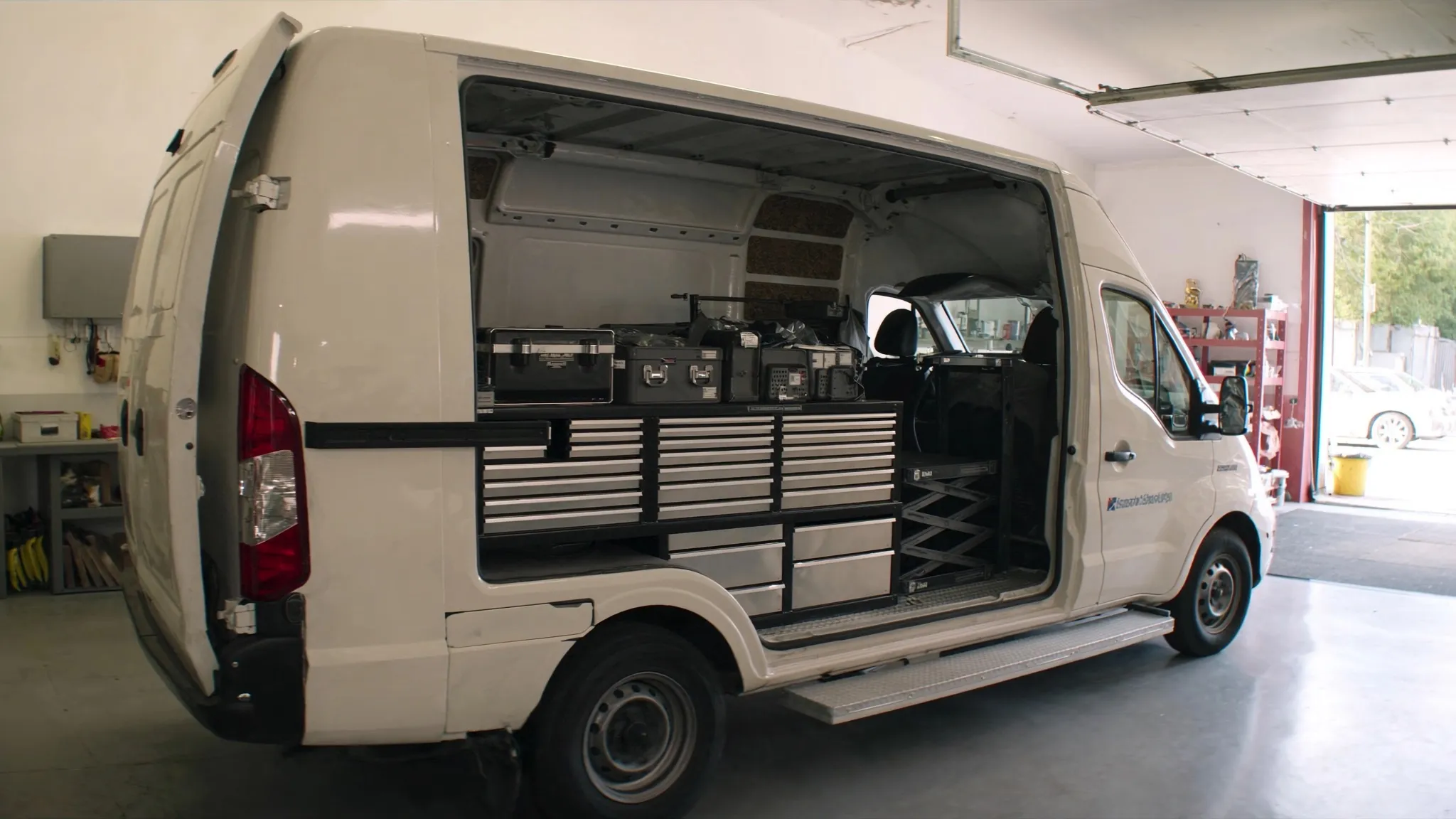
Mobile repair is the part of the independent-shop economy that grew through the 2024–2025 stretch when brick-and-mortar shops were posting flat year-over-year revenue. Three things drove it. Small-fleet operators — landscapers, HVAC companies, last-mile delivery contractors with 5–20 vans — increasingly wanted PMs done in their own yard before Monday morning instead of losing a truck for a day. Dealer service departments hit booking backlogs that pushed warranty-adjacent and out-of-warranty work to mobile contractors willing to come on site. Residential customers, once a thin slice of the demand, became a real revenue line as homeowners saw mobile pricing land within $40–$80 of a shop estimate without the tow or the drop-off. The result is that someone deciding to start a mobile mechanic operation in 2026 is no longer building demand from scratch. They are stepping into a market that already exists.
The startup capex math has moved with it. A lean entry — used van, hand tools and a starter scan stack, no lift — runs around $80,000. A full-build entry with a new van, a portable lift, a current-generation scan platform with ADAS coverage, and an A/C machine ready for current refrigerant work pushes $150,000. The financing structure between those two endpoints looks different at each tier, and the breakeven math sits in different places.
The vehicle: $35K used to $75K new-build
The van is the largest single line on the budget at both ends.
A used Ford Transit or Ram ProMaster in the 2020–2022 range with under 80,000 miles, upfit-friendly cargo configuration, and a clean inspection runs $32,000–$45,000 in mid-2026, depending on region and trim. Upfit on a used chassis — cabinetry, work surface, power inverter, lighting, ventilation, exterior signage — adds another $8,000–$15,000 if done by a commercial upfitter, less if the operator does the build themselves over a few weekends.
A new Transit or ProMaster comparably specced, with the upfit done as part of the purchase by a commercial conversion shop, runs $58,000–$75,000 all-in. The premium over used reflects a longer warranty horizon, a full service history starting at zero, and the option to spec a higher payload package for operators planning to carry a portable lift or heavier equipment.
Vehicle financing rates on new commercial vans are running in the 6.5–11% range in mid-2026 for qualified borrowers, with terms typically 60–72 months. Used vans price a notch higher and term shorter — most lenders cap used-vehicle terms at 48–60 months depending on age and mileage. The collateral is a titled asset, which is why the rate sits below general equipment financing. Operators starting a mobile business should price the van separately through a van-specific financing program for mobile service businesses rather than rolling it into a general equipment package — the dedicated structure usually delivers a meaningfully lower payment over the life of the asset.
The tool and diagnostic stack: $25K to $55K
This is the line item where the lean-versus-full split shows up most clearly.
A starter stack — hand tools, mid-tier scan tool with basic OEM coverage, jump pack, OBD cables, basic torque tools, oil and fluid extractors, a portable battery tester — comes in around $12,000–$18,000. That kit handles PMs, brakes, batteries, basic diagnostics, fluid services, and most light electrical work. It does not handle current-model ADAS calibration, EV high-voltage diagnostics, or anything requiring a full-vehicle lift.
A full-build diagnostic stack pushes higher. A current-generation scan platform with subscription coverage for ADAS, EV high-voltage systems, and OEM-level bidirectional control runs $8,000–$14,000 up front plus $2,500–$4,500 annually in subscription. An A/C machine compliant with current refrigerant standards adds $4,500–$8,000. A portable two-post or mid-rise lift rated for the work runs $5,000–$12,000 depending on capacity and portability features. A small generator or battery-pack power system to run shop-grade tools on site adds $1,500–$3,500. Organized cabinetry and a proper work-surface buildout, if not already included in the upfit, adds another $3,000–$6,000.
A reasonable full diagnostic and equipment stack lands at $40,000–$55,000. Most of this finances on standard equipment loans in the 7–14% range over 36–60 month terms. Before committing to a specific package configuration, run the actual monthly payment through a monthly payment calculator for shop equipment — the gap between a 48- and 60-month term on a $45,000 stack changes the monthly cash requirement by more than most first-time operators expect.
Insurance, software, marketing, operating capital: $20K-$35K in year one
The line items that don’t show up on an equipment invoice are the ones that catch first-year operators off guard.
Commercial auto insurance on a service van with tools-in-vehicle coverage runs $3,500–$6,500 annually depending on state, driving record, and coverage limits. General liability and garage-keepers coverage adds $1,800–$3,500. Workers’ comp, if the operator brings on even a part-time second tech in year one, adds another $2,000–$4,000.
Shop management software — invoicing, customer records, scheduling, parts ordering integration — runs $150–$400 per month for the platforms built around independent mobile operators. Payment processing, accounting software, and a basic dispatch or routing tool add another $100–$250 per month. Marketing — a basic website, local SEO setup, fleet wraps on the van, and a starter ad budget for the first six months — typically lands at $4,000–$8,000 in year-one spend.
Working capital is the line that most first-year operators underestimate. Parts on commercial accounts get paid 30–60 days after the invoice. Payroll and fuel run weekly. The operating-capital cushion needed to bridge that gap — even for a one-person operation in the ramp-up months — typically runs $10,000–$20,000, and most operators end up funding it through a short working-capital line in the 12–22% APR range rather than draining personal savings.
The total capex envelope
Adding it up:
- Lean entry: $35K used van, $10K upfit, $15K starter tool and scan stack, $20K year-one insurance/software/marketing/operating-capital cushion. Total: roughly $80,000.
- Full-build entry: $70K new van with full upfit, $50K full diagnostic stack with portable lift and current-refrigerant A/C, $30K year-one insurance/software/marketing/operating-capital cushion. Total: roughly $150,000.
What the full-build buys that the lean entry does not: current-generation ADAS calibration capability, EV high-voltage diagnostic coverage, lift-required work (suspension, exhaust, transmission service), full-refrigerant A/C service, and the operating capital to survive a slow ramp without scrambling for emergency credit.
The financing stack across the full-build typically looks like this: the van on a 60–72 month vehicle loan at 6.5–11%, the equipment stack on a 48–60 month equipment loan at 7–14%, and the operating-capital cushion either on a working-capital line at 12–22% APR or pulled from owner contribution. Current Section 179 expensing rules let most first-year operators deduct a meaningful share of the equipment and vehicle capex against year-one income, which compresses the after-tax cost of the buildout — but the specifics depend on the operator’s tax situation and current-year limits, and that conversation belongs with a CPA, not a vendor sales rep.
Breakeven: when the financed payments cover themselves
Run the math on the full-build at conservative assumptions. The van payment on $70,000 financed at 8.5% over 72 months is roughly $1,250/month. The equipment payment on $50,000 financed at 10% over 60 months is roughly $1,062/month. Insurance and software combined run around $900/month. That’s roughly $3,200/month in fixed cost before the operator pays themselves.
At an average revenue of $280 per service call (a blend of $180 PMs, $350 diagnostic-and-repair calls, and $450 multi-line service visits), the fixed-cost nut clears at about 12 calls per month. Most operators in their first full year are running 60–110 calls per month once routing and customer base stabilize. That puts the gross above fixed cost by a wide margin — what’s left funds parts cost, fuel, the operator’s draw, and the working-capital buffer.
The lean entry has a smaller fixed nut — closer to $1,800/month — and clears at 7 calls per month. The tradeoff is a narrower service menu, lower average ticket on calls that require equipment the lean kit doesn’t include, and no path into ADAS or EV diagnostic work without a later capex round.
The bottom line
A 2026 mobile mechanic startup is a real business decision, not a side project. At $80,000 lean or $150,000 full-build, the capex commitment looks more like opening a small shop than buying a toolbox. The financing structure makes the monthly cost manageable, but it also means the operator is carrying real fixed cost from month one. The math works at modest call volume. What kills first-year operators is not the equipment payment — it’s underestimating the working-capital gap and ending up on the wrong product for that specific need. Price each piece of the stack on the product built for it, run the actual monthly numbers before signing, and the buildout funds itself faster than most operators expect.