ADAS calibration ROI in 2026: when a $120K target system pays back
Insurer-paid billing on ADAS calibrations now ranges $300-$1,400 per job depending on system and OEM. On a $120K multi-OEM target setup, the breakeven shows up faster than most collision shops model.
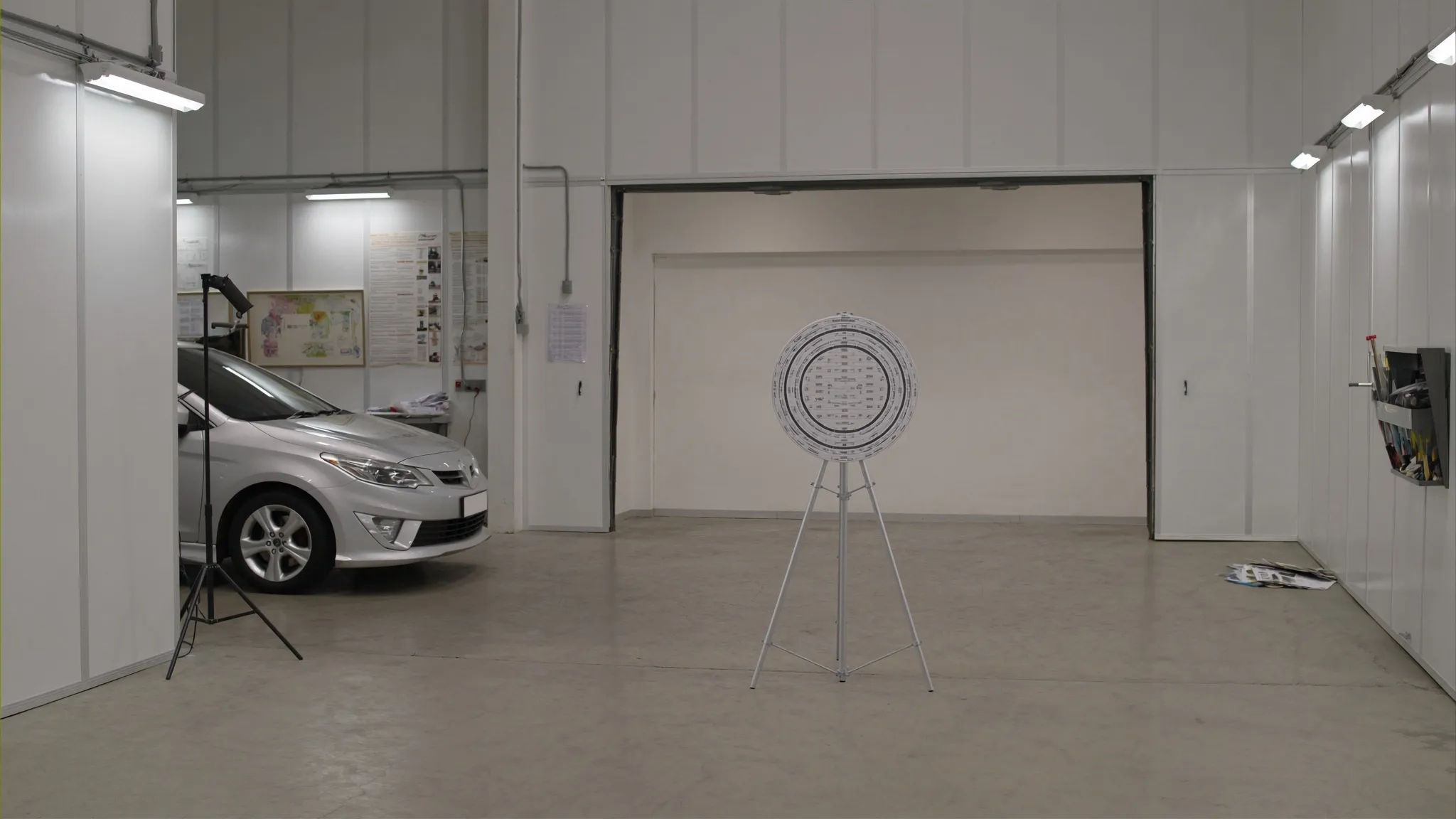
Three years ago, ADAS calibration was a line item most collision shops sublet without thinking about it. The work showed up on the estimate, a third-party calibration vendor came out, the bill got passed through, and the shop moved on. That math has changed. Insurer billing on calibration line items now runs $300–$1,400 per job depending on system complexity and OEM procedure requirements, and the average modern collision claim now carries more than one calibration line. The economics of in-housing the work have crossed the line for a wider band of shops than were paying attention in 2023.
The question is not whether the equipment pays off. At current billing rates and current claim volumes, nearly any shop with consistent collision throughput can build a case on paper. The question is which tier of equipment to buy, what financing structure fits, and what monthly calibration volume actually covers the payment when the rest of the assumptions are conservative.
The equipment menu
ADAS calibration tooling sorts into four tiers, and the price gaps between them are wide enough to drive the rest of the analysis.
Static target boards, entry tier ($25K–$40K installed). A starter setup — a few static target boards, the lane markers, a basic alignment-adjacent calibration bay setup, and the scan tool licensing to drive the procedure. Covers a meaningful slice of front-camera and front-radar calibrations on common platforms. Does not cover dynamic calibration procedures, does not cover the wider target geometry that newer OEM procedures specify, and leaves a long tail of jobs that still have to sublet.
Dynamic calibration tooling and scan platform upgrade ($55K–$75K). Adds the diagnostic platform and the driving-cycle tooling needed to complete dynamic calibrations, which a growing share of OEM procedures now require either alongside or in place of static work. Covers a much broader set of in-house jobs, but still leaves the higher-end multi-camera and lidar-equipped vehicles to a partner.
Multi-OEM target system, full bay ($110K–$135K installed). The category most shops are now sizing against. A dedicated calibration bay, the full target board library, the alignment integration, the lighting and floor flatness work, and the scan platform licensing across the major OEM coverage. Closes the in-house gap on the vast majority of modern collision work, including most of the higher-billing dynamic-plus-static combinations.
Premium multi-OEM with lidar and night-vision tooling ($180K–$240K+). The high end. Covers the longest tail of OEM procedures, including the newer lidar and infrared sensor families that are increasingly common on premium platforms. Justifiable for shops on premium DRP rosters or in markets where the calibration mix skews toward luxury and EV platforms. Overkill for most general collision shops.
The $120K tier is where the math gets interesting, because it covers the work the entry tier can’t touch without buying a system the average shop won’t fully utilize.
The revenue model
Two numbers drive the entire model: average calibrations per collision claim, and in-house calibration volume per week.
The first number has moved. Older collision estimates carried calibration on a minority of jobs. Modern estimates routinely carry one to three calibration lines on a single claim — a forward-camera recalibration after a windshield replacement, a blind-spot radar recalibration after a quarter panel repair, a 360-camera recalibration after a bumper R&R. A shop running 60 collision claims per month at an average of 1.6 calibration lines per claim is generating roughly 96 calibration opportunities per month. Not all of those are in-housable, but a wide majority are with a $120K tier setup.
The second number is what the shop can actually complete on the floor. Calibration procedures run anywhere from 30 minutes for a simple static recalibration to 3+ hours for a full dynamic-plus-static combination on a multi-camera vehicle. A dedicated calibration bay with a trained technician realistically completes 4–7 calibrations per day. At five working days per week, that is 20–35 calibrations per week of capacity.
At a blended average insurer billing of $650 per calibration line — a conservative midpoint of the $300–$1,400 range, weighted toward the higher-complexity work a $120K system is built to handle — 20 calibrations per week generates $13,000 in weekly calibration revenue. Gross margin on calibration work is high (labor-heavy, minimal parts), running in the 70–80% range once the technician is trained and the bay is dialed in.
The breakeven math
A $120,000 system financed over 60 months at current equipment rates — call it 10% APR, sitting in the middle of the 7–14% equipment financing range for mid-2026 — produces a payment of roughly $2,550 per month. That payment is covered by 4 calibrations per month at the $650 blended billing. Four. Not four per week. Four per month.
That number is the headline of the analysis, and it is also the most misleading number in it, because the rest of the cost stack matters.
A realistic monthly operating cost for a $120K calibration bay includes the equipment payment, the scan tool and target software subscriptions ($600–$1,100/month depending on OEM coverage breadth), the technician labor allocated to the bay (variable, but allocated roughly $4,000–$6,500/month against calibration work specifically at typical A-tech rates), facility allocation for the dedicated bay, and the targeted continuing education and recalibration verification costs. All in, the realistic monthly cost-of-operation for the bay runs in the $8,000–$11,000 range.
At $650 blended billing, that breaks even at roughly 12–17 calibrations per month. At 20 calibrations per week of capacity, the bay clears breakeven in the first week of any normal month and operates the remaining three weeks at high margin. For shops financing the system into a collision-specific equipment financing structure that underwrites against DRP relationships and calibration revenue specifically rather than treating the bay as generic capex, the approval timeline and the payment structure typically come in tighter than what a generic equipment lender quotes on the same package.
Two adjustments shift the breakeven number in either direction. Cycle-time savings on collision claims that no longer wait for a sublet calibration appointment compress the schedule and free up bay space for other work — that is real revenue, even if it doesn’t show on the calibration line. And the upsell side — calibrations now performed in-house on customer-pay glass work, on used-car reconditioning for the dealership next door, and on the occasional outside collision shop that doesn’t have its own bay — adds incremental revenue that the base model doesn’t count.
Run the actual numbers through a monthly payment calculator for shop equipment before signing. The spread between a 48- and 60-month term on a $120,000 package shifts the monthly nut by roughly $450, which is enough to change whether the bay clears operating cost on a slow month.
When in-house beats sublet
The sublet alternative typically costs the shop $250–$500 per calibration paid to the third-party vendor, plus the cycle-time cost of holding the vehicle for the appointment. A shop running 60 claims per month with 1.6 calibration lines each is paying out roughly $30,000–$60,000 per quarter in sublet calibration fees, and absorbing two to four extra days of cycle time on a meaningful share of jobs.
The in-house economics beat sublet decisively for any shop running consistent collision volume above roughly 40 claims per month, with a calibration line on more than half of them. The DRP work tightens the case further — insurers tracking cycle time penalize sublet-driven delays, and shops that calibrate in-house frequently land better DRP scoring as a result.
When it doesn’t
The case for in-housing weakens in three situations.
Low-volume shops. A general repair shop running 8–15 collision claims per month doesn’t generate enough calibration volume to cover the bay’s operating cost, let alone the payment. The math falls apart below roughly 25 in-house calibration opportunities per month, and the equipment sits underutilized.
Geographically convenient sublet partners. Some markets have calibration vendors operating dedicated bays within a 15-minute drive of most collision shops, with same-day turnaround. In those markets the sublet cycle-time penalty largely disappears, and the per-job cost differential is the only economic factor left — which is rarely enough on its own.
Equipment-utilization mismatch. A shop that books primarily lower-complexity collision work (minor cosmetic, bumper-only, light hail) may carry few enough complex calibration jobs that the $120K tier is overbuilt. In that case the entry tier at $25K–$40K covers what the shop actually sees, and the higher tier is the wrong purchase.
Bottom line
A $120K multi-OEM calibration bay clears its equipment payment with four calibrations per month and clears full operating cost in the first week of any month with reasonable collision volume. The arithmetic is forgiving. The risk is not the equipment — it is the assumption that the in-house volume materializes. Shops sizing the purchase for the first time should model conservatively on calibrations per claim, hold the blended billing assumption in the middle of the range, and treat the upside from cycle-time gains and outside calibration work as exactly that: upside. The bay still works on the conservative case. That is the version of the model worth signing against.